
The Power of Magnification
When you think of a dental visit, you probably picture the chair, the light, and the tools, but there’s one game-changing tool you might not notice: magnification.
It’s quietly transforming how dentists work and how students learn, making care smarter, more precise, and more comfortable than ever before.
What Is Magnification in Dentistry?
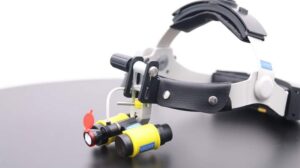
Magnification in dentistry refers to the use of tools like loupes or dental microscopes that allow clinicians to see fine details not visible to the naked eye. These tools range in power and functionality, but all share a common goal: to enhance the dentist’s vision and accuracy during treatment.
Here’s what Dr Jean Van Lierop have to say about Magnification.
Seeing is Treating: “My Journey with Dental Magnification“
“I started using magnification in 2002, during my third year in private practice—and I haven’t looked back since. What began as a helpful tool quickly became an integral, irreplaceable part of how I practice dentistry”.
“Over the years, I’ve come to firmly believe that predictable, high-quality dentistry is simply not possible without proper visual control. You can only treat what you can see. Magnification is not a luxury—it’s essential”.
“Today, I work with up to 4x magnification through advanced loupes. The improvement in precision and the overall quality of my work has been profound. When paired with effective rubber dam isolation, this level of visual clarity forms the cornerstone of modern adhesive and restorative dentistry”.
In my view, magnification isn’t just a tool—it’s a mindset of clinical excellence.
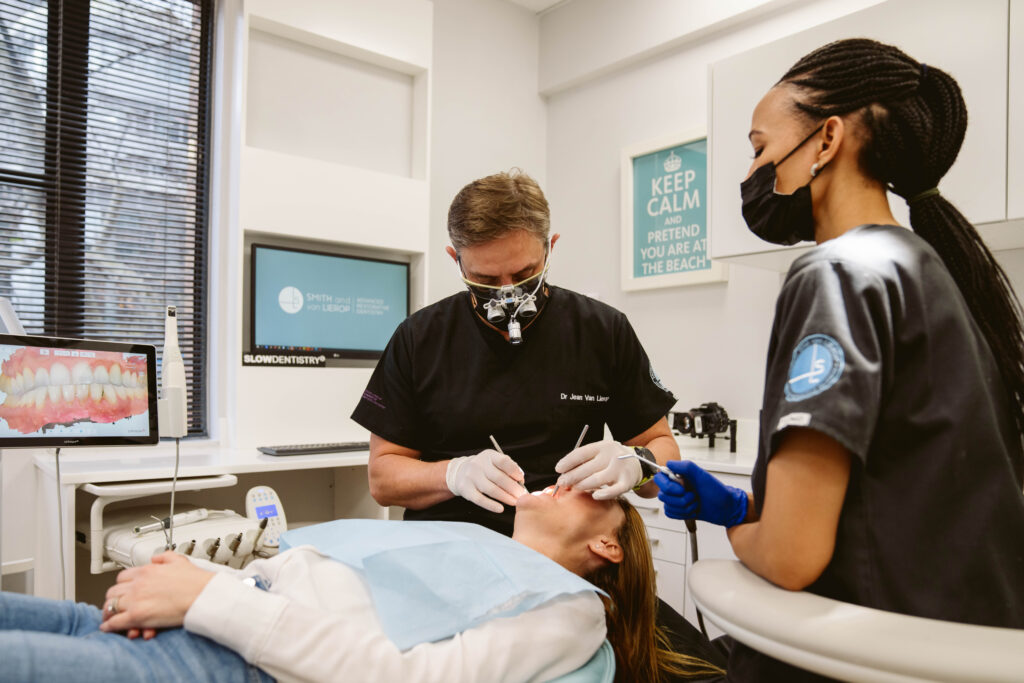
Here Dr Mark Bowes gives us his view on Magnification and how it has changed dentistry for him
“I introduced loops into my practice in 1990,35 years ago. I initially invested in high quality loops which I still own today and have since then upgraded from 2x to 6x magnification.
The interesting thing about dentistry is, it’s all in the detail, and those details you can only see with magnification. So, for many dentists, they believe they’re doing a good job because they can see the detail. And whether it’s a functional case, a biological case, or an aesthetic case, you need to be able to zoom in to make sure that those details have been addressed.
The interesting thing about magnification is that it also improves your posture. So it’s no surprise that here I am many years later?43 years later? and still loving my job with no back problems.
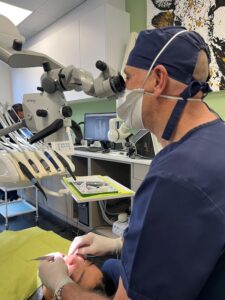
Here Dr Mark Bowes is seen using the Zeiss microscope, which he uses for things that really need high magnification that normal loops can’t see.
Microscopes we use for things that really need high magnification that even normal loops can’t see.
And he quotes 🙂 “seeing is believing”
For Dr David Huson magnification has been one of the most valuable tools in his many years of practicing dentistry.
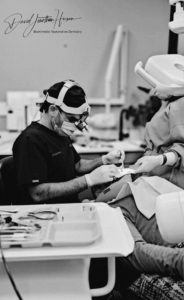
It’s become an essential part of how he works — especially when it comes to diagnosis and the early identification of things like cracks or caries that might otherwise go unnoticed.
But perhaps the most impactful benefit magnification has brought him is the ability to deliver pain-free injections ,without the need for digital anaesthesia. Using traditional anaesthetic techniques, magnification allows Dr Huson to be incredibly gentle, precise, and patient-focused. It’s helped him better see what needs to be treated, while also improving the patient experience by making procedures more comfortable.
The Clinical Benefits of Magnification
Magnification lets Dentist see the tiniest details, so they can work with incredible accuracy, especially in tight, delicate areas. That means better fitting fillings, crowns, and veneers. It also allows us to be more conservative when preparing teeth, removing only the damaged or decayed areas and keeping more of your natural tooth intact.
With enhanced visibility provided by magnification tools, dentists can spot problems that might otherwise go unnoticed. Tiny cavities (caries), fine cracks in the enamel, or even early signs of fractures can be incredibly difficult to detect with the naked eye or under standard lighting. Magnification allows us to see these issues in their earliest stages — often before they cause pain or visible damage.
Magnification helps dentists work in better posture, reducing strain during long procedures. Dental procedures often require intense focus and precision over extended periods of time. Without the right tools, dentists can experience physical strain, especially in the neck, back, and shoulders. Magnification tools, such as loupes and microscopes, help improve working angles and support a healthier posture, reducing fatigue during longer treatments.

How Magnification Benefits Patients
How Magnification Is Changing Dental Education
Magnification isn’t just for experienced dentists anymore — it’s becoming a key part of how future dentists are trained. Many dental schools now introduce it early on, and it’s making a big difference.
Learning with magnification encourages students to slow down, observe carefully, and develop a habit of precision. These are skills that carry over into every procedure they’ll perform throughout their careers.
Using magnification tools boosts fine motor skills and hand-eye coordination. Students become more confident and technically sharp before they even graduate.
Since most modern clinics use magnification, students who train with it hit the ground running. It’s no longer just a fancy add-on — it’s essential for top-quality care. Whether you’re here for a routine visit or training to become a future dentist, you’ll benefit from the power of precision that magnification brings.